
Finding off base housing Yokosuka families are happy with comes down to three decisions made in order: pick the area that fits your commute and lifestyle, budget for Japan's front-loaded move-in costs, and lease a property the base housing office will accept.
- Central Yokosuka trades space for a short commute; Zushi and Hayama trade commute time for a quieter, coastal feel.
- Japanese leases front-load costs: a deposit, key money and an agency fee are usually due before you get the keys.
- Start with the CFAY Housing Services Center so the rental you choose meets the base's acceptability criteria.
- Off-base living offers more choice and a deeper local experience; on-base living offers simplicity and proximity.
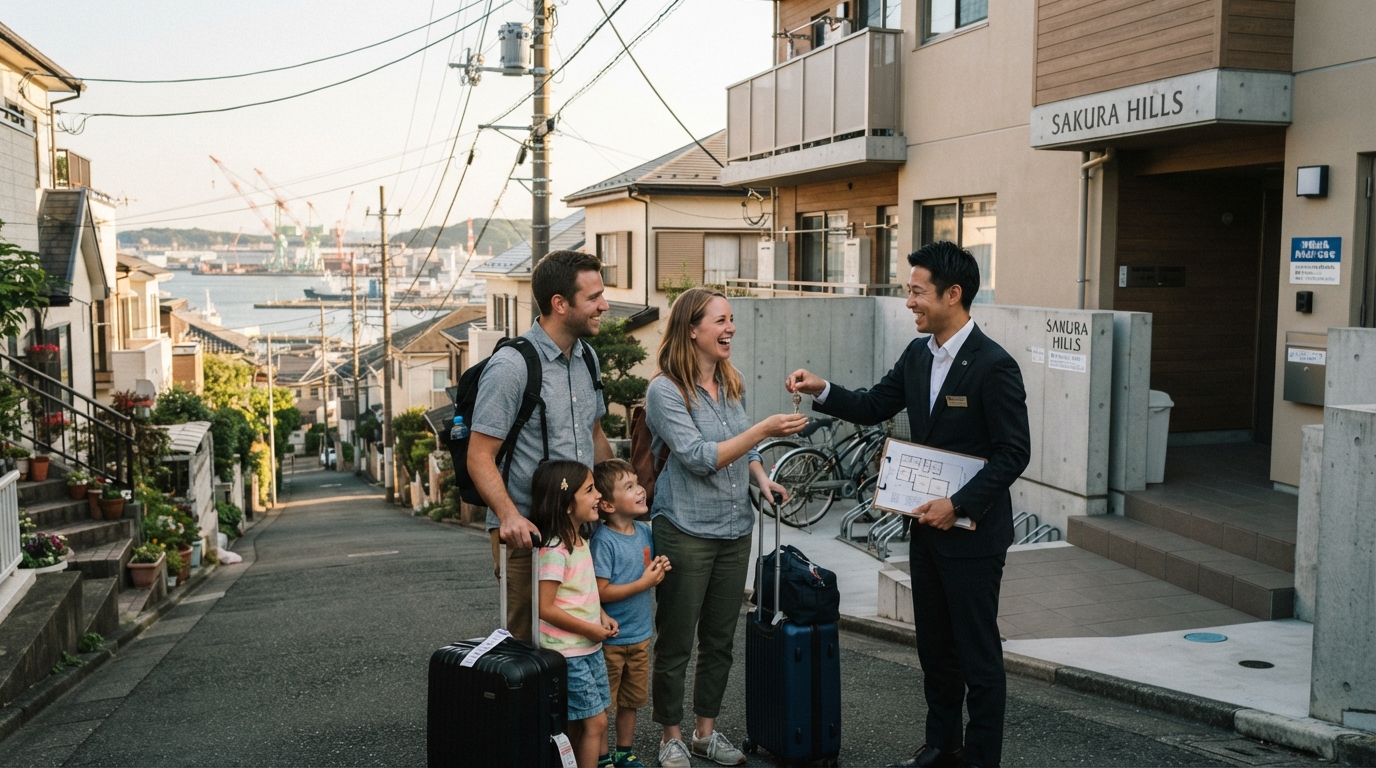
Which neighborhood should I choose for off-base housing near Yokosuka?
Choose the area by how much commute you will accept each day: central Yokosuka keeps you closest to the base, while Zushi and Hayama offer more space and a beach-town pace in exchange for a longer trip in.
Central Yokosuka suits members with early or unpredictable duty hours. Rentals here tend to be apartments and compact homes, and daily errands are close by. Zushi is a quieter coastal town with a strong residential feel, popular with families who want a little distance from base life. Hayama, further along the coast, is the most relaxed of the three and often offers more house-style properties, but it asks the most of your commute. Some families also look toward Yokohama when a spouse works there or when they want big-city amenities, accepting the longest trip to base.
Before you commit, drive or ride the route at the hour you would actually report for duty. Narrow roads, school-run traffic and train transfers can change how a commute feels on a map versus in real life.
How much does it cost to move into an off-base rental in Japan?
Expect to pay several months' worth of rent up front, because Japanese leases bundle a security deposit, non-refundable key money and an agency fee into the move-in bill.
Here is what each line usually means:
- Security deposit (shikikin): held by the landlord and returned at move-out, minus cleaning and any damage.
- Key money (reikin): a one-time, non-refundable payment to the landlord. Not every property charges it.
- Agency fee: paid to the real-estate agent who arranges the lease.
- Guarantor company fee: many landlords require a guarantor, and newcomers without one often use a guarantor company instead.
- Renewal fee: some leases charge a fee when the contract renews.
This guide on how renting in Japan works walks through the guarantor system, why security deposits, key money and agency fees make upfront costs so high, and how two-year contracts and renewal fees work. Ask any agent for an itemized estimate of initial costs before you apply, so nothing on the final bill surprises you.
Military members authorized to live off base receive an Overseas Housing Allowance (OHA) to help cover private rent and utilities. Rates and which move-in costs are covered depend on your situation, so confirm the current figures with your housing office and finance office before you sign rather than budgeting from a friend's numbers.
What does the base housing office do for off-base renters?
For off base housing Yokosuka arrivals, the CFAY Housing Services Center is the first stop: it helps you find rentals that meet the base's standards and supports you through the leasing process.
According to the CFAY government housing page on Military OneSource, units in the RPP meet all CFAY off-base housing acceptability criteria, including hot and cold running water, screens on all windows, sufficient electricity and parking, and proximity to the base; families interested in the RPP are directed to contact the CFAY Housing Services Center.
Japanese rentals are frequently unfurnished, and some come without major appliances. The CFAY housing overview notes that the Yokosuka Housing Self-Help office can provide Japanese appliances for off-base rental quarters if the owner or landlord has not already installed them. That can make an otherwise ideal property workable.
How do I get through Japanese lease paperwork?
Work through a bilingual agent or the housing office, read every clause before signing, and keep copies of everything, because Japanese lease contracts are detailed and written in Japanese.
Pay particular attention to the lease term and notice period, what the deposit will and will not cover at move-out, who is responsible for repairs, and whether pets or extra occupants are allowed. Ask about any clause that covers early termination, since military orders can change. Photograph the property's condition on move-in day and share the photos with your agent; it makes the deposit conversation at move-out far easier.
When we work with military families arriving in Yokosuka, Yokohama and Zushi, the paperwork is usually where confidence drops. The listing looked perfect, but the contract arrives in Japanese with fees and conditions nobody explained. We've found that families who ask for the key terms in plain English before they apply, and who loop in the housing office early, move in with far fewer surprises.
Is it better to live off base or on base in Yokosuka?
Live off base if you want more choice of home and a fuller Japan experience; stay on base if you value simplicity, proximity and fewer moving parts.
Off-base advantages: a wider range of property types and areas, more room in coastal towns, and daily life immersed in Japanese neighborhoods. Off-base trade-offs: higher upfront costs, Japanese contracts, garbage-sorting rules and a commute. On-base advantages: walking distance to work and base services and a familiar setup. On-base trade-offs: less choice in where and how you live, and availability is not guaranteed. Pet owners should weigh options carefully, since pet-friendly properties can be harder to find on either side of the gate.
Quick answers for newly stationed families
Can I start my off base housing Yokosuka search before I arrive?
You can research areas and listings early, but most families finalize a lease after arriving, once they have checked in with the housing office and seen properties in person.
Do I need a car if I live off base?
Not always. Central Yokosuka can work without one, while Zushi and Hayama are easier with a car, especially for families with young children.
What should I bring to my first viewing?
Bring your questions about move-in costs, lease terms and appliances, plus a way to photograph the property so you can compare options later.